Showing posts with label Ponty Chadha. Show all posts

Monday, 30 March 2015

Duriyai’s Health Camp by the Ponty Chadha Foundation

Despite being one of the largest exporters of pharmaceuticals, India’s healthcare statistics continue to be a nightmare. Medical assistance is still out of reach for over 700 million people. Though several government policies and programs are afloat, their true effectiveness is questionable in the dearth of any tangible improvement on the ground level. Apparently, ever-widening gaps on the implementation front continue to make the country’s performance in healthcare domain shoddy, to say the least.

Recent case studies point that the number of Primary Healthcare Centers (PHCs) is limited; 8-10 % of these centers fail to staff sufficient doctors, around 39% of them still lack laboratory technicians, and 17-18% of them do not even have a pharmacist. 

One such village is Duriyai, which faces a severe lack of healthcare facilities. 

Ponty Chadha Foundation

In a bid to sensitize the locals of Duriyai about basic precautions against general ailments, the Ponty Chadha foundation, in collaboration with the Indo German Hospital, organized the third consecutive health camp at Duiryai. Held on the 11th of March, 2015, it started off at 10:00 AM and lasted until 1:00 PM. The sheer enthusiasm and active participation of the villagers was truly commendable- a total of 152 patients from 400 families benefitted from the camp. 

Motto-driven volunteers from the Ponty Chadha Foundation and a team of dedicated doctors from the Indo German Hospital wholeheartedly contributed to the initiative and saw the camp off smoothly. Seating arrangements were made at the Baithak (common meeting point of the villagers) which was spacious enough to accommodate a healthy turnout.   

Majority of attendees had problems pertaining to joint pain and hearing impairment, for which they were immediately treated. However, those who needed extended treatment were duly referred to the Indo German Hospitable for a detailed check-up and follow-up treatment. In an interaction with the residents waiting for their turn to see a doctor, it came out that people often neglect their health problems, especially women who ignored serious troubles pertaining to gynaecology. The camp thus gave the locales a chance to treat persisting ailments, for which they could never seek medical attention before.  

Considering the overall scenario, which might have turned out to be disastrous in long run prospects, doctors and volunteers of Ponty Chadha Foundation sensitized the villagers on the imperativeness of their healthcare. 

About the Foundation 

The Ponty Chadha Foundation is a charitable trust established in the memory of the late Mr. Ponty Chadha of the Wave Group. The Foundation is active in areas of special education and early childcare and currently has Mr. Manpreet Chadha (Monty Chadha) as the Vice Chairman.

Wednesday, 18 March 2015

Fostering Health Care In Usmangarhi: The Ponty Chadha Foundation

With the objective to make health care more accessible across rural areas nationwide, the Ponty Chadha Foundation has been conducting a series of health camps aimed at helping the poor with free medication and guidance. 

In collaboration with the Indo German Hospital, the Foundation organized its third consecutive health camp in the Village Usmangarhi where a total of 181 patients from 400 families were thoroughly screened for different health disorders.

Usmangarhi Health Camp


The camp, held on 25th of February 2015, started at 9.30 in the morning and continued on until 1.00 pm in the afternoon. A sizeable assemblage was seen queuing up from early hours, which was managed together by volunteers of the foundation and hospital. Apart from conducting basic health check-ups, the camp referred cases requiring advanced diagnostics to the Indo German Hospital. 

The event was held at the Pradhan’s place which provided enough space for a healthy turnout. A pre-check process was set in place for the patients to get themselves registered before waiting for the doctors. They were issued OPD cards carrying their name and age which were later on used for prescribing medicines. 

With their OPD cards with them, the patients were handed medicines from a separate counter. Upon interaction with the villagers, it was learnt that lack of awareness and unavailability of medical facilities were major roadblocks preventing the villagers from pursuing timely treatment. 

Finally, in a short educational session and interaction with the Usmangarhi’s residents, they were sensitized on health, hygiene and sanitation which would help them in keeping chronic and acute infections at bay. 

The Ponty Chadha Foundation is a charity foundation, and the CSR wing of the Wave Group. This foundation has been dedicatedly working towards making quality health care affordable and accessible ever since its inception.  

Tuesday, 3 March 2015

Festivity in the air at Mata Bhagwanti Chadha Niketan’s 16th Annual Day celebration

An aura of mirth and festivity filled the auditorium as the differently abled children of Mata Bhagwanti Chadha Niketan took centre stage with their energetic performances. “Jeena Isi Ka Naam Hai”, this year’s theme not only was at the heart of entire celebration but it also underlined the guiding principle of the school. The students rolled out exhilarating performances which and a flurry of extended applauses greeted them. 

Presence of the Delhi Waveriders Hockey team, Captain of DWR and Indian hockey team - Sardar Singh, Mr. Kartikay Saini- Chairman of The Scottish High international school, Air Marshal K. Malik- Director Special Olympic-Delhi, Dr. J.P. Singh- Chairman Amity Foundation for Developmental Disabilities and Former Member Secretary & Executive Head-Rehabilitation Council of India, and Mr. Pramod Sharma- Director cum Principal- Genesis Global School added charm to the event. 

MBCN

After the breath-taking performances, children were spotted sharing some cherishable moments with Sardar Singh and the other team members of DWR. They did not miss a chance to take their autographs and expressed their gratitude by presenting hand-made hampers.     
The celebration did infuse pride in MBCN’s principal, Ms. Vandana Sharma, who praised her students for their strong and positive approach towards life. She congratulated all of them on their hard work and participation in the event and encouraged them to keep the same gusto up in life. Adding on, she asserted that this cultural programme gives them an opportunity to come together and generate significant positive change and build momentum for their ongoing efforts.  

Established in the year 1999, MBCN is a school for differently abled children that has been working for their rehabilitation and social independence under the aegis of The Ponty Chadha Foundation, which is the CSR arm of the wave Group. Ponty Chadha Foundation dedicatedly works towards progression of the impoverished and brassic stratum of society.

Thursday, 22 January 2015

Mehrauli Health Camp by Ponty Chadha Foundation

Continuing with its ongoing drive aimed at spreading awareness on healthcare, the Ponty Chadha Foundation held a health camp on January 6, 2015 in one of the villages facing lack of healthcare facilities, the village of Mehrauli in Delhi NCR.

The Foundation was aided by the Indo German Hospital which assisted by sending teams of doctors and paramedics to the location. The camp saw people queuing up as early as 10 AM so that they could get themselves enrolled for the check-up.


Anticipating a huge turnout, volunteers of the Ponty Chadha Foundation had made arrangements at the local school premises. As a part of the registration process, the attendees were asked to record their names and age down on an OPD card which was then used by the doctors to record their diagnosis and prescribe medication.

It was found during the examination that there were a number of people with mild symptoms of heart and skin issues who were administered aid and provided medicines. Some of them who needed advanced diagnostics were referred to the Indo German Hospital for further aid.

On interacting with the gathering, it was also learnt by the Foundation’s volunteers that many women had developed signs of impending gynecological problems but would not seek consultation owing to lack of awareness and options. Majorly, most patients showed signs of heart and skin issues.

The free health camp acted as a curtain raiser for the people of the village. It helped them understand the importance of getting treated on time through early diagnosis. Many of the villagers also received free medication.

All in all, the villagers got their fair due from the camp.

Ponty Chadha Foundation is the CSR arm of one of India’s largest business conglomerates, the Wave Group. Under Vice Chairmanship of Mr. Manpreet Chadha (Monty Chadha), the group has expanded its CSR activities into the spheres of special education, food fortification, and rural healthcare.

Wednesday, 7 January 2015

The Ponty Chadha Foundation: Facilitating Rural Healthcare

With the United Nations report hinting towards chronic lack of medical facilities in rural areas, it is needless to underline that healthcare system in India has never been inclusive. While 75% of the healthcare system, including doctors and infrastructure, is concentrated in urban areas, rural India with almost 716 million people, faces critical health issues. Even though current healthcare infrastructure is centred on metropolitan cities, the irony remains that it is accessible to only those who can afford it.

One of the most critical requirements for an effective healthcare system in rural India is that of doctors. It is a matter of acute importance that rural India faces a shortage of doctors, as much as 64%.

The UN report suggests a shortage of more than 12,300 specialist doctors. Cognitive to this shortage, The Ponty Chadha Foundation (PCF), along with the Indo German Hospital, regularly organizes medical camps in the remote areas of North India and Delhi NCR.

With an aim to empower medical facilities in these areas, the Foundation set up another medical camp in the Village Inayatpur.  The camp which was held on 17th December started off its proceedings at 1000 hours. While the assemblage started queuing up in the early hours of the day, the Foundation’s’ volunteers were well-prepared to manage them well.  Administering free aid and advice on general health, the camp had a specialized team of doctors from the Indo German Hospital which also looked into critical health conditions.

The camp which was set up in the premises of the Pradhan’s residence had ample space to accommodate the registration process and seating arrangement. Since it was a strong turnout, the volunteers were kept on their toes while facilitating free check-ups.

A total of 141 patients out of 350 families attended the camp, during which they were guided through check points with OPD cards. During the course of the camp, it came out that a majority of the villagers suffered from respiratory and gastro related health problems. The volunteers in conversation with the locals also confirmed that various skin and gynaecological problems were also common in the residents of Inayatpur.

Benefitting from the camp, a large percentage of residents got free medicines from the doctors and others with critical issues were further recommended to the Indo German Hospital.

The Ponty Chadha Foundation, CSR arm of Wave Group, is now a prominent name in social drives, and endeavours towards a healthy India by constantly organizing free health camps in remote areas.

Monday, 22 December 2014

Giving Rural Healthcare a Boost: Ponty Chadha Foundation

India’s growth over the past few years has made it one of the rising economies worldwide. That growth however has not been inclusive, certainly not when it comes to public healthcare. 

While towns and cities have banked on the economic spike and strong healthcare infrastructures have come up, rural India seems alienated from such benefits. There is extreme lack of facilities in some places and professional access is vulnerable. 

ponty chadha foundation

The village of Shadipur Chiddoli brings out the real picture of India’s rural healthcare. In a village dominated by population of women and children, there is no regulated medicare facility which has left the villagers indisposed and vulnerable to disorders of joints and skin. 

On learning of the state of affairs in the village, the Ponty Chadha Foundation, which is the CSR arm of the Wave Group, held a health camp on 3rd December, 2014 to spread awareness about common disorders and conduct free medical check-ups with doctors from the Indo German Hospital joining in. 
Anticipating a huge gathering, the premises of a local school were brought into use. An examination and dispensing centre was set up and patients were asked to undergo mandatory registrations which began at 10 AM and continued on until the camp ended at 1 PM. 

During the examinations, it came out that a high number of the villagers showed signs of developing skin, gynecological, and joint issues. On interacting with them, volunteers from the Ponty Chadha Foundation realized that lack of awareness and options were the leading causes for the villagers neglecting evident symptoms.

A session was then held educating the villagers on the advantages of timely treatment and early diagnosis. Some villagers who were found showing developing symptoms were referred to the Indo-German Hospital where they would be administered treatment and advanced diagnostics. 

Rural healthcare is one of the areas of social welfare undertaken by Ponty Chadha Foundation, the CSR subsidiary of the Wave Group. Its outreach spans food fortification and special education. Under Vice Chairman Manpreet Chadha (Monty Chadha) the Wave group has gone on to become one of India’s leading realty conglomerates. 

Wednesday, 17 December 2014

Transforming Rural Health: Ponty Chadha Foundation

Healthcare is a fundamental right but many in India, especially rural India, do not get to enjoy it. Endogenous and exogenous factors continue to thwart thousands in rural areas from accessing fundamental healthcare.

The village of Shekhpur Khicra is a classic allegory of lack of healthcare facilities and rising cases that seek medical attention. After philanthropic organization Ponty Chadha Foundation overviewed the situation, it discovered medical attention was long overdue and set up a health camp on November 26th 2014.  

Ponty Chadha Foundation

The premises of the village school were drawn upon for hosting the event. Things kicked off early at 10 AM when the attendees started pouring in. Teams of doctors from the Indo German Hospital had joined in and together with volunteers from the Foundation they ensured things ensued in a businesslike manner.

A communications center was also set up where registrations took place. Every attendee had to register before they could see the doctor and an OPD card for the same was issued. Medicines and aid were thereafter given out from a separate counter within the premises.

On interacting with the gathering, volunteers from the Ponty Chadha Foundation realized the village had been facing gynecological and gastro issues but due to lack of options and awareness, they had not been able to seek proper treatment.  A short counselling session on the need of timely treatment and addressing many long-standing queries was also held.

 It also came out during the exchange that the village is made up by a large population of children and infants who were particularly indisposed to the lowly hygiene culture that prevails in the area. The volunteers then went on to discuss and spread awareness on the importance of hygiene and how the villagers could raise the bar on personal hygiene.

Some of the patients were found exhibiting signs of respiratory and joint issues and a few had to be referred to Indo German Hospital where they will be offered advanced diagnostics and treatment.

Ponty Chadha Foundation is the philanthropic wing of Wave Group established in memory of late Mr. Gurdeep Chadha. Its areas of influence include childcare, special education, and food provisioning.

Thursday, 30 October 2014

Ponty Chadha Foundation’s Village Naiphal Health Camp

As much as India has progressed on spreading basic healthcare far and wide, villages still seem a forbidden lot.  Some of them, like village Naiphal in Ghaziabad, still don’t have facilities of their own and rely largely on facilities a fair distance off.

Rather ironically, the village that has lately been notified as an urban body has no medicare facility of its own but hinges on the single government setup in Dasna Tehsil for its own health. This has made medicare hard to come by for villagers, many of whom face signs of respiratory, joint pain, and vision disorders.

When Ponty Chadha Foundation zeroed in on this particular village, it found many of the villagers warranted a medical prognosis of the signs they had developed. The Foundation took cognizance of this and on the morning of September 6th 2014, a large-scale health camp was organised at the village temple premises.

Doctors and teams of paramedics from Dr. Ram Saran Garg Indo German Hospital voluntarily stepped in as part of the drive to administer free aid and advise the villagers on general healthcare. The event picked up steam quite early as eager villagers made a beeline for the camp, and by 0700 hours, a sizable gathering had queued up for making mandatory registrations. 

Nearly 700 families attended the event which culminated around 1300 hours after every attendee had got medical aid and attention from the teams of doctors and assistants. The temple premises aided coordination and order with ample seating arrangements made in advance by the PCF teams.

The objective of the camp to provide aid and educate the villagers on early diagnosis was successfully achieved as a number of the attendees with signs of likely respiratory, vision, and joint-related disorders chose to pursue further treatment at the Indo German hospital. PCF and the hospital also pledged aid and support to these villagers pursuing further line of treatment.

The Ponty Chadha Foundation actively takes up social welfare.  Health camps in remote areas are one of the ways the Foundation brings up rural health to the forefront. The current drive focuses on villages in North India and Delhi NCR which lack even basic healthcare access. The Foundation’s outreach extends to charities and organisations actively involved in social upliftment, one noted among those being the Mata Bhagwanti Chadha Niketan (MBCN). 

Friday, 26 September 2014

Ponty Chadha Foundation’s Naiphal health Camp

The adage ‘health is wealth’ could never have been any truer than now.  While everybody these days scurries through tight schedules, it is health that gets pushed to the backburner. Though that’s generally true of urban populace, Ponty Chadha Foundation has learnt that villages have their own share of larger, and often unrecognized, problems. 

One such village is Naiphal in Ghaziabad.  The villagers here have been faced by lack of medical aid for the longest time, which was taken cognizance of by the Foundation, and, a health camp organised on 6th September, 2014.

The day set off early as villagers started queuing up at 0700 hours by the village temple which was used for the event. By 1000 hours, doctors and paramedics from the Dr. Ram Saran Garg Indo German Hospital got the camp officially underway, and by the stroke of noon, over 100 families had got a general health check done.

The momentum was maintained right through untilevery attendee had had themselves medically examined. As planned, by 1300 hours the whole village was comprehensively covered. 

As the paramedics and teams of doctors went about their business, a group of volunteers from the Ponty Chadha Foundation tended to the assemblage in the temple hall where due arrangements to accommodate the gathering had been made. 

Other volunteers divvied up in teams to ensure the villagers made the most of this opportunity and the event went by well-ordered.  Every villager was guided through a check point where they displayed their registration details before seeing the medical team. 

The dwellers of village Naiphal, it came out during the camp, were particularly prone to respiratory, joint, and vision issues, with quite a few of them, needing further treatment. Such cases were, after being examined and administered available aid, asked to show up at the Indo German Hospitalwhere they would get treated with support and aid from the Foundation

It is rather surprising that the village does not have any Anganwadi centre to aid its population. Ponty Chadha Foundation learnt through a former Anganwadi worker that the village was deemed an urban body which has putit directly under the purview of Dasna Tehsil’s government facility. Ever since, the gap between facilities and aid has only widened,and the village has not got due attention from the concerned authorities.

Monday, 25 August 2014

Ponty Chadha Foundation's Kazipura's Health Camp

The morning of 25th June was a bright one for the people of Kazipura, for the residents, in unison, assembled at Ponty Chadha Foundation’s free health campaign set up for treating health issues inherent in the region.

The village of Kazipura has a lot of people who suffer from joint pain and cataract. The most perturbing of all issues is that a greater part of the village finds professional healthcare hard to get to, and hence it’s kind of normal for matters of health to be shirked away as a way of life.

Realizing the problem, the Ponty Chadha Foundation approached with the solution of a health camp that attracted people from all walks, specially mothers and children. Dr. Ram Saran Garg hospital, the best Indo-German hospital around, and its team of doctors and paramedics collaborated in raising health awareness and treating the villagers for various issues.

The camp started at 10 in the morning and by 1 pm, a sizable population from the village of 250 families had got checked up for cataract and joint pain in particular, and undergone general healthcare checks.

The residents were beforehand informed to get themselves registered.  The team of doctors and the medical team, in tandem, ensured requisite medicaments were provided and those in need of extended medical supervision are taken under the wing.

The Ponty Chadha foundation has been doing its bit to scale up social welfare across the country. It focuses strongly on the idea of social parity through endeavours in health, education, and special care.

The Foundation also strongly advocates malnourishment eradication and several of its efforts, especially in rural India, are directed towards that. It has garnered the support of Indian FoodBanking Network and is steadily extending outreach through countrywide programs from time to time.

Wednesday, 30 July 2014

Ponty Chadha Foundation Initiates Health Camp in Hathipur

Healthcare in India is not a level playing field. Though technological advancements have led to state-of-the-art facilities across states, high treatment costs put these virtually out of bounds of the poor.

The existing public healthcare system, plagued by infrastructural, staffing, and quality issues, falls short on catering to over 260 million people in need of healthcare and nutrition support. Such a massive pressure exposes the cracks in the system all the more, and leaves nearly a third of the country deprived of quality health facilities.

Extending support in bridging some of the gaps is the Ponty Chadha Foundation. Recently, at a health camp held in village Hathipur (UP), the Foundation, along with staff from Dr. Ram Saran Garg (Indo-German) Hospital, tended to the indisposed with free medication, consultation, and examination.

Prenatal care was one of the key focus areas since the geography faces inadequate maternity care facilities. Would-be mothers and those who had recently embraced motherhood made a beeline for expert care from a distinguished team of doctors and paramedical staff.

The area has also been prone to cataract.  The old, in particular, have been majorly predisposed owing to below par ophthalmic support. A special team of ophthalmologists and optometrists served the affected, carrying out free surgeries, and educating the villagers on post-operative care.  The team also encouraged those with developing signs to adopt corrective measures.

In line with guiding principles of social welfare, a series of measures initiated across the country by Ponty Chadha's Foundation have helped bring aid to hundreds of needy with limited quality healthcare options. Some of the more recent efforts have been in small places like Inayatpur, Shadipur Chhidoli, and Dinanathpur Puthi and plans to extend further out to remote locales are on the way.

Monday, 23 June 2014

The Ponty Chadha Foundation: Curbing Child Malnutrition in India

The common perception about malnutrition in India being primarily a lack of food issue has been straightened out by the recent World Bank findings which state that lack of a central policy for food dissemination and low focus on quality have been instrumental in India lacking behind some sub Saharan African nations on the prevalence of underweight children.

Malnutrition in children is also as rampant because of inappropriate primary care facilities, high predisposition towards infection, and lacking in feeding and care, in the first few years of a child. This puts children in India, particularly from the economically marginalized classes, at the greatest risk of having to bear long-term malnutrition consequences.

India's central, and the most comprehensive policy response to child malnutrition, the Integrated Child Development Services (ICDS), has not been as effective in controlling child malnutrition due to a number of reasons.

Firstly, the deployment for targeting greater mass coverage and the core focus of the program being children above three years of age have rendered the ICDS widely unyielding. Children under two years of age have been proven the most vulnerable, but this group is not what the ICDS is particularly aimed at.

Demographic and socioeconomic variables also play an important role, but as per the World Bank, greater damage is being caused by a lack of established food supply system and quality control. India produces enough food for its internal consumption, but is unable to feed its poor because of an imbalance between supply and production.

The Ponty Chadha Foundation has been drawing the nation’s attention on this front through its various initiatives directed at plugging the supply chain gaps. Its pilot food banking project in Delhi NCR has been acknowledged by the India Food Banking Network (IFBN) for being a charity-driven food chain that procures food directly from government funded agencies and ensures it gets delivered the quickest to the needy in Noida and Ghaziabad.

Sunday, 15 June 2014

The Ponty Chadha Foundation: Food Bank Solution for Malnutrition

A major focus of the UN’s Millennium Development Goals (MDG), set in 2000 with a 2015-deadline, is to reduce the child mortality rate and bolster maternal care and health across the world. While a few countries, like China, have achieved phenomenal success with the MDG goals, India is more than likely to miss the mark on child malnutrition, sanitation, and other key social parameters despite a number of programs and measures having been introduced.

The World Bank puts a number of reasons accounting for India's lack of success to deduce that the country does not lack in food production means but has not been able to create an established system of monitoring nutrition and food delivery. A high segment of the malnourished population suffers because access to food sources and government programs is either limited or non-existent.

The Ponty Chadha Foundation's food banking concept, aimed at providing greater access to food supplies, addresses malnutrition at the core. The concept involves a chain of subsidiaries for procurement of government aided and surplus food supplies from charities, NGOs, and markets. The procurement, after being put through standard quality control checks, is delivered directly to an identified demographic.

A pilot run of the concept has been launched in Delhi NCR wherein the poor and needy from 18 villages around Noida and Ghaziabad are aided with food supplies. The initiative has already been recognized and supported by the Indian Food Banking Network (IFBN) and the foundation is planning to implement the system further across the country.

In line with its guiding philosophy of inclusive growth, the Ponty Chadha Foundation also runs free medical checks in special camps held across the country. It also aims at creating greater malnutrition awareness in the nation by engaging the youth of the country. Special sensitization drives are held to foster progress on this front.

Monday, 2 June 2014

The Fight Against Malnutrition

The value of good nutrition can hardly be overstated. Well-developed cognitive abilities along with sound physical and mental health and a healthy attitude towards life add up to greater earning capacities in adulthood, and consequently, a stronger nation.

It has been observed that the average wage of stunted and malnourished individuals is nearly twenty percent less compared to their counterparts. The cumulative effect that a large malnourished section can have on a nation’s economy is, therefore, immense.

The above analysis must be a strong area of concern from India’s standpoint. The nation, despite riding a decade of high economic surge, has widely been ineffective to cut back malnutrition. The country, according to the World Bank, ranks below some of the poorest sub Saharan nations on the prevalence of underweight children.

India faces a horde of issues when it comes to malnutrition, so much so that the Integrated Child Development System (ICDS), India’s central policy framework that aims to fight malnutrition, has been rendered partially ineffective.

It’s a little ironical that India does not suffer as much from shortage of production and poverty as from the lack of well-organised food delivery and nutrition. Food subsidies and special schemes are launched from time to time, but various demographic, socioeconomic, and geographical inequalities reduce their impact.

Another issue is the widening chasm between the classes. India’s strides on the economic front have not produced an equitable growth model. The already rich have benefited while the poor have little to draw out of it. The divide has created a palpable societal imbalance favouring the urban rich.

Furthermore, malnutrition cannot be treated with one yardstick across the country. There are several local and demographic factors at play. Certain states, for example, have been traditionally more predisposed towards child malnutrition. Others are affected to varying degrees and exhibit vastly different statistics for boys and girls. A one-size-fits-all approach cannot make a viable solution.

Realising the need for India to adopt a more inclusive approach on malnutrition, the Ponty Chadha Foundation has introduced a set of measures aimed at countering the issue with a modern, empirical approach.

The foundation has set out a plan to identify prevalent local factors to be met with tailor-made food banks. A food bank is a typical supply chain,which takes local influences into account and delivers quality controlled supplies directly to a pre-identified demographic.

The first of the chains is set up in Noida and Ghaziabad and has won the backing of the India FoodBanking Network (IFBN). The Foundation now looks at expansion into other parts.

Wednesday, 28 May 2014

India's Malnutrition Measures Need to Be Remodelled

India’s Millennium Development Goal (MDG) for 2015 mandates child mortality to be cut down by two-thirds.A low rate of progress and a range of associated factors have nearly made it a tall order, virtually out of reach.Currently, the nation ranks even below some of the sub-Saharan nations with its population of underweight children among the highest in the world, reports the World Bank.

India accounts for nearly one-third of the poor in the world. Nearly one-fourth of its population -- over 400 million people -- are given to poverty and impoverishment. More than half of those (sixty percent) come from a group of seven states with the lowest income quintile.

Furthermore, one-third of the new-borns are weak and fall below optimal birth weight. About forty-three percent of the children under the age of five are underweight, forty-eight percent stunted, nearly seventy percent highly prone to be anaemic, and over fifty percent exhibit a lack of Vitamin A.

In 2001, the Supreme Court mandated in a statutory ruling that the ‘Right to Food’ be implemented as one of the fundamental citizen rights. That brought immediate legal binding to the nutrition-intensive schemes running at that time. The central government further announced, in 2005, the enactment of National Rural Employment Guarantee Act to aid the unemployed poor.

The most current of all malnutrition reforms has been the National Food Security Bill, which aims at providing highly subsidized food grains to nearly seventy percent of the population, passed by the Parliament in 2013. Even with a host of reforms, and a central Integrated Child Development System (ICDS) in place, the malnutrition rate in the country still exhibits an extremely high percentage, with children affected the most.

The problem, as observed by the Ponty Chadha Foundation and other institutions dedicated to the cause, does not lie in shortage of food, but in a lack of adequate means of supply. The Foundation also observes that government and other beneficiary schemes get scuttled because the benefits do not reach the intended target.

Taking strong view of this particular concern, the Foundation has started off a campaign to set up food banks across the country. These banks directly reach the poor with nutrition-intensive supplies procured from government charities, NGOs, and subsidiary associates of the Ponty Chadha Foundation.

The pilot trial in Noida and Ghaziabad itself has earned the backing of the India FoodBanking Network (IFBN), and the underlying aim is to take the program further into the country.

Wednesday, 21 May 2014

The Ponty Chadha Foundation: Serving the Malnourished

The World Bank has stated that one in three malnourished and poverty stricken people in the world live in India. According to the Global Hunger Index compiled by the International Food Policy Research Institute, 60 million children under the age of five and 21% of the overall population in India do not get proper food to eat. These statistics have made the nation to rank 68th out of 79 countries in the world in terms of malnutrition and poverty, even behind most sub-Saharan counties. The facts are in sharp contrast to the strong economic growth that India has been experiencing in the last fifteen years, and could leave everyone, from the man on the street to malnutrition experts, baffled.

A nation that boasts of economic growth but has a sizable population dealing with malnutrition and its aftereffects has got to revisit its growth fundamentals. A century ago, famines were held to be the main cause of malnutrition, but today, it’s a broken down supply chain infrastructure that’s hurting India more than anything.

Roadways, especially those that lead to agro-industrial areas, are not up to the mark, and, the produce goes through a plethora of middlemen and handlers before it reaches the marketplace. A considerable portion either rots along the way or loses wholesomeness. Moreover, such a long supply chain delays food from making it to marketplace, jacking up end-consumer prices in the process.

Rising prices, coupled with lack of quality control, makes it extremely difficult to create equitable nutrition standards, as is evident from the fact that India was among just three countries worldwide where nutrition situation actually worsened in the period from 1996 to 2011.

The National Food Security Bill was introduced in the parliament in early 2012 in the first attempt by the government to address this issue. Though well intentioned, it suffered from fundamental flaws. While it aims to subsidise food grains, it fails in accounting for the ambitious scale of the initiative, given India’s size and economic bindings. Most experts recommend improving transportation infrastructure and supply channels for a solution, a costly proposition in itself, but one which promises a more long term solution.

Improving the supply chain network so that food supplies directly reach the neediest of the needy is the mission of the Ponty Chadha Foundation, and it has set off by aiming to achieve the target in 18 villages around Noida and Ghaziabad in the NCR. Partnering up with India FoodBanking Network (IFBN), the foundation organises free food drives in the vicinity of their commercial projects as well as in a wider network of villages surrounding the metropolitan areas of the NCR, with talks of expanding the reach of the program pan-India.

Thursday, 15 May 2014

The Ponty Chadha Foundation works to Keep Malnourishment at Bay

Malnutrition is defined by a lack of some or all nutritional elements essential for human health, and in India alone, children are the most visible victims of malnutrition. According to the latest UNICEF data, in India, one in three children is malnourished while 58% under the age of five are underweight or stunted. It might also come as surprise that in a survey conducted by the World Bank, one in three malnourished people in the world reside in India. In another study published by UNICEF, 68.7% of Indians survive on less than INR 124.00 a day.

India ranks 68th out of 79 countries in terms of malnourishment and hunger according the Global Hunger Index (GHI) and was among only three countries where the hunger situation actually worsened in the last few years (from 22.9% in 1996 to 23.7% in 2011), behind other developing nations such as Nepal, Pakistan and Bangladesh.

In olden times, it was fair to attribute malnutrition to widespread and frequent famines. However, in the present day, the production of food has increased dramatically and better means of agriculture are made available, but ironically, malnourishment has correspondingly increased. Studies make it abundantly clear that lack of enough food production is not at the root of the problem, but as majority of the experts agree, it’s that food does not reach the people most in need. It has become less of a production issue and rather a problem of the food supply chain.

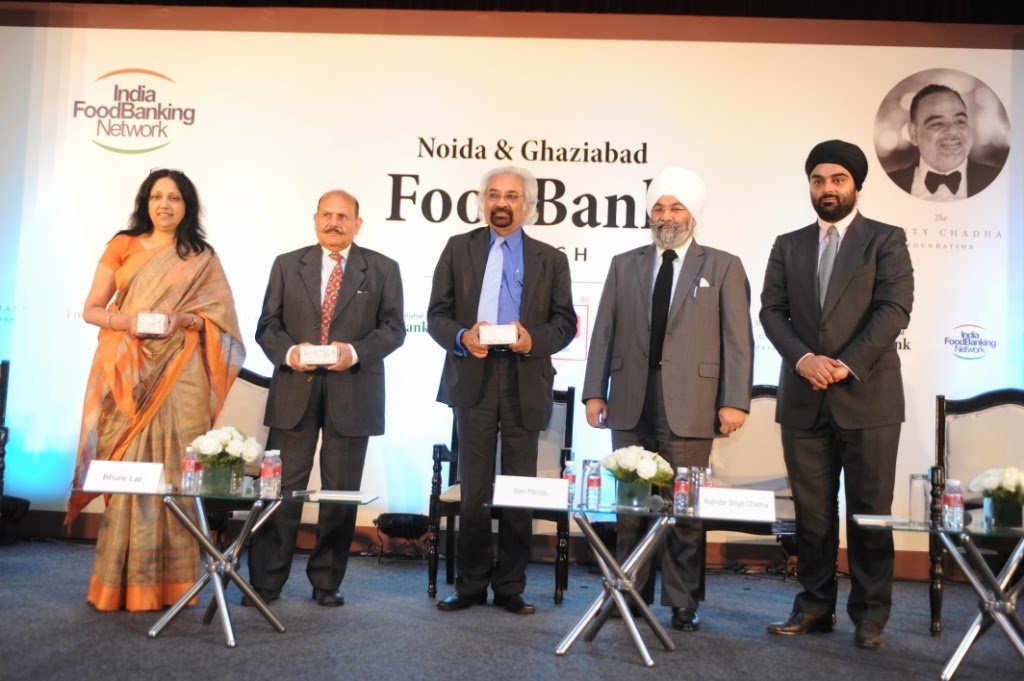
The Ponty Chadha Foundation is looking to distribute food and help ease the problem of malnourishment through the concept of food banking. To this end they have partnered up with the reputed India Food Banking Network (IFBN) organising campaigns under the Ghaziabad-Noida Food Bank banner to distribute food to the poor through frequent free food drives in the villages around Noida and Ghaziabad. At present, the scope of the program is limited to the NCR region, but there are plans to extend the reach of the program to cover the whole of the country to further Mr. Ponty Chadha’s vision of a progressive India.

Friday, 3 January 2014

The Ponty Chadha Foundation Takes On Poverty at the Grassroots

Ponty Chadha
Hunger is a massive problem in most developing nations and India, in particular, is one of the worst affected nations globally in terms of food distribution and poverty. Although a governmental welfare system of rationing food supplies is in place which caters to low income families, as for most of those living below the poverty line, this system is not adequate. Various studies have reported India as just slightly higher than the poorest of the poor nations in the world. The World Bank states that as many as one in three undernourished and poverty stricken people of the world reside in India. 

The problem lies with the fact that many of the welfare programs and food distribution drives are unable to reach out to majority of people in need, with bribery and corruption failing even the most well-intentioned efforts. This is largely why India ranks 68th out of 79 countries on the Global Hunger Index (GHI) and starvation rate actually increasing from 22.9% in 1996 to 23.7% in 2011. 

The news is not all bad though. The Poverty Development Goal Report has said that almost 320 million people in India are on their way to being lifted out of poverty by 2015 and that out of all the South Asian countries, India is the only one that is on the right path to halving the poverty rate by the target of 2015. 

Helping to meet this demanding target is the Ponty Chadha Foundation, established in the memory of Mr. Gurdeep Singh (Ponty) Chadha; which established the Ghaziabad-Noida Food Bank in collaboration with the reputed India FoodBanking Network (IFBN). By putting in place concrete steps to ensure welfare of poor people through free food programs, the foundation aims to enhance the lives of those below the poverty line in villages around Ghaziabad and Noida, and helping out people in the vicinity of its Wave City projects near NH-24, Ghaziabad.

Thursday, 26 December 2013

The Ponty Chadha Foundation: Need to Tackle Malnutrition

Malnutrition is a burning issue and accounts for nearly 50% of infant mortality in India alone. Every third adult aged between 15 and 49 years is reported to be malnourished. According to the latest report on the state of food insecurity in rural India, more than 1.5 million children are threatened by malnutrition because of the rise in global food prices.

India ranks 65th out of 79 countries on the Global Hunger Index (GHI) that document nations worst affected by hunger. It also states that India’s starvation rate has increased from 22.9% to 23.7% over the past decade. This indicates that development drives have failed to reach out to those who need them the most. Thus, the importance of tackling poverty is crucial rather than simply reducing the number of welfare recipients.

The Ponty Chadha Foundation is tackling the complex issue of hunger through various community services. These include organizing food distribution drives in rural areas around Ghaziabad and Noida, with the most recent one organized at the Genesis Global School, Noida on October 12, 2013.

The Ponty Chadha Foundation, established in the memory of Mr. Gurdeep Singh (Ponty) Chadha, works towards combating hunger and malnutrition. The Foundation has collaborated with the reputed India Food Banking Network (IFBN), organizing free food distribution drives to eradicate malnutrition in rural areas around Noida and Ghaziabad. It is committed to working towards the betterment of society and dedicated to feed the poor. The foundation aspires to gather and utilize resources towards the upliftment of the underprivileged and spread its scope of work nationwide.