Showing posts with label Food Banking Network. Show all posts

Monday, 23 June 2014

The Ponty Chadha Foundation: Curbing Child Malnutrition in India

The common perception about malnutrition in India being primarily a lack of food issue has been straightened out by the recent World Bank findings which state that lack of a central policy for food dissemination and low focus on quality have been instrumental in India lacking behind some sub Saharan African nations on the prevalence of underweight children.

Malnutrition in children is also as rampant because of inappropriate primary care facilities, high predisposition towards infection, and lacking in feeding and care, in the first few years of a child. This puts children in India, particularly from the economically marginalized classes, at the greatest risk of having to bear long-term malnutrition consequences.

India's central, and the most comprehensive policy response to child malnutrition, the Integrated Child Development Services (ICDS), has not been as effective in controlling child malnutrition due to a number of reasons.

Firstly, the deployment for targeting greater mass coverage and the core focus of the program being children above three years of age have rendered the ICDS widely unyielding. Children under two years of age have been proven the most vulnerable, but this group is not what the ICDS is particularly aimed at.

Demographic and socioeconomic variables also play an important role, but as per the World Bank, greater damage is being caused by a lack of established food supply system and quality control. India produces enough food for its internal consumption, but is unable to feed its poor because of an imbalance between supply and production.

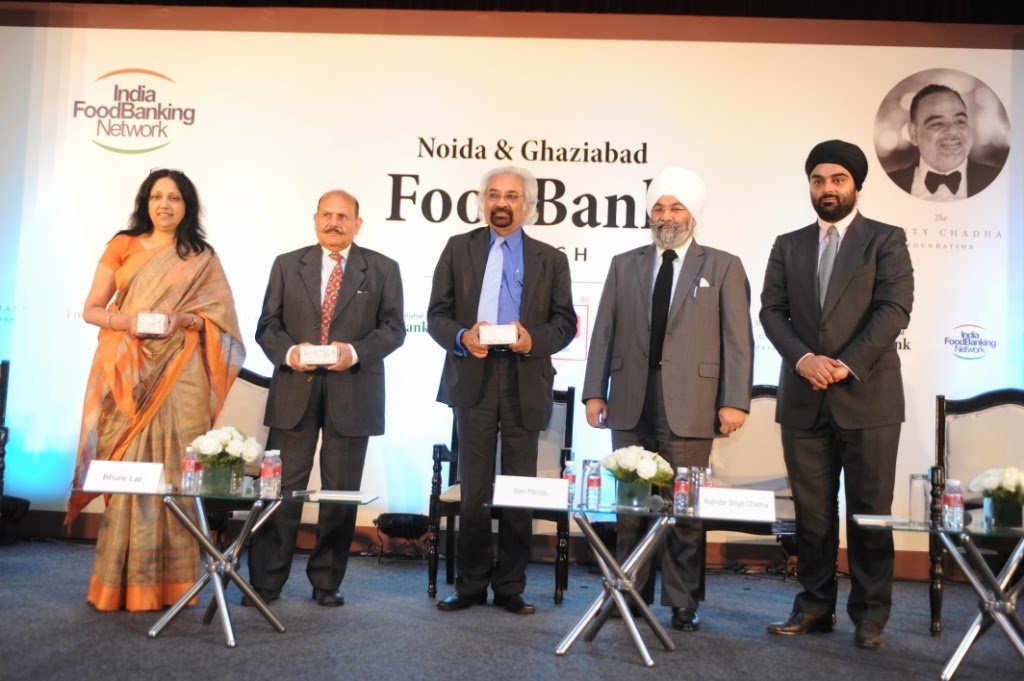
The Ponty Chadha Foundation has been drawing the nation’s attention on this front through its various initiatives directed at plugging the supply chain gaps. Its pilot food banking project in Delhi NCR has been acknowledged by the India Food Banking Network (IFBN) for being a charity-driven food chain that procures food directly from government funded agencies and ensures it gets delivered the quickest to the needy in Noida and Ghaziabad.

Sunday, 15 June 2014

The Ponty Chadha Foundation: Food Bank Solution for Malnutrition

A major focus of the UN’s Millennium Development Goals (MDG), set in 2000 with a 2015-deadline, is to reduce the child mortality rate and bolster maternal care and health across the world. While a few countries, like China, have achieved phenomenal success with the MDG goals, India is more than likely to miss the mark on child malnutrition, sanitation, and other key social parameters despite a number of programs and measures having been introduced.

The World Bank puts a number of reasons accounting for India's lack of success to deduce that the country does not lack in food production means but has not been able to create an established system of monitoring nutrition and food delivery. A high segment of the malnourished population suffers because access to food sources and government programs is either limited or non-existent.

The Ponty Chadha Foundation's food banking concept, aimed at providing greater access to food supplies, addresses malnutrition at the core. The concept involves a chain of subsidiaries for procurement of government aided and surplus food supplies from charities, NGOs, and markets. The procurement, after being put through standard quality control checks, is delivered directly to an identified demographic.

A pilot run of the concept has been launched in Delhi NCR wherein the poor and needy from 18 villages around Noida and Ghaziabad are aided with food supplies. The initiative has already been recognized and supported by the Indian Food Banking Network (IFBN) and the foundation is planning to implement the system further across the country.

In line with its guiding philosophy of inclusive growth, the Ponty Chadha Foundation also runs free medical checks in special camps held across the country. It also aims at creating greater malnutrition awareness in the nation by engaging the youth of the country. Special sensitization drives are held to foster progress on this front.

Tuesday, 10 June 2014

Malnutrition Remains A Concerning Cause For India

For India, a strong, able bodied workforce that can drive production, increase exports, and strengthen the nation economically is a crucial growth factor. However, with the World Bank malnutrition findings, rating India worse than some of the poorest nations worldwide,and stating that the prevalence of underweight children in India to be higher than sub-Saharan nations, India’s growth aspirations stand severely challenged.

A huge malnourished section is a big impediment for any country and can potentially stall growth by creating an underproductive, undernourished workforce. India, in particular, has a culturally strong labour force, and the country needs it, to keep pace with the growing economy and support expanding infrastructure.

The fight against malnutrition has been a prolonged one for India. It is almost since independence that the country has been faced with malnutrition, and even with a number of schemes and programs being devised,checking the malnutrition curve has been a tall order.

According to the World Bank, India’s Integrated Child Development Services (ICDS) is one of the most comprehensive and well-placed schemes to trigger a change, but needs a different implementation approach. Instead of focusing on gaining demographic coverage alone, the ICDS must be looked at in a way that promotes faster food delivery, nutrition control, and other core fundamentals.

The challenges for the undernourished set in, as early as birth, with as many as one in three newborns underweight, a majority on account of the malnourished mother. If not cared for, such children are highly likely to develop cognitive and physical disorders arising from the effects of stunting and wasting.

Serving hopeto the millions of malnourished in India is the Ponty Chadha Foundation which was established to further the vision of philanthropy. The foundation works towardhelping the weaker sections of society, through charity-driven socioeconomic measures.

Together, with the acclaimed India FoodBanking Network (IFBN), the foundation introduced the concept of the food bank in Noida and Ghaziabad wherein a chain of donors is used for procurement of food supplies delivereddirectly to those most in need, thereby eliminating supply chain delays.

The Ponty Chadha Foundation also offers free medical aid to the poor in 18 villages around Noida and Ghaziabad by periodically-organized free health checks and camps, with the aim to reach out to those socially marginalised and under-served sections of society in a short span of time. It also aims to sensitize the youth towards the needs of the poor by getting them involved with the Foundation’s schemes and programs.

Monday, 2 June 2014

The Fight Against Malnutrition

The value of good nutrition can hardly be overstated. Well-developed cognitive abilities along with sound physical and mental health and a healthy attitude towards life add up to greater earning capacities in adulthood, and consequently, a stronger nation.

It has been observed that the average wage of stunted and malnourished individuals is nearly twenty percent less compared to their counterparts. The cumulative effect that a large malnourished section can have on a nation’s economy is, therefore, immense.

The above analysis must be a strong area of concern from India’s standpoint. The nation, despite riding a decade of high economic surge, has widely been ineffective to cut back malnutrition. The country, according to the World Bank, ranks below some of the poorest sub Saharan nations on the prevalence of underweight children.

India faces a horde of issues when it comes to malnutrition, so much so that the Integrated Child Development System (ICDS), India’s central policy framework that aims to fight malnutrition, has been rendered partially ineffective.

It’s a little ironical that India does not suffer as much from shortage of production and poverty as from the lack of well-organised food delivery and nutrition. Food subsidies and special schemes are launched from time to time, but various demographic, socioeconomic, and geographical inequalities reduce their impact.

Another issue is the widening chasm between the classes. India’s strides on the economic front have not produced an equitable growth model. The already rich have benefited while the poor have little to draw out of it. The divide has created a palpable societal imbalance favouring the urban rich.

Furthermore, malnutrition cannot be treated with one yardstick across the country. There are several local and demographic factors at play. Certain states, for example, have been traditionally more predisposed towards child malnutrition. Others are affected to varying degrees and exhibit vastly different statistics for boys and girls. A one-size-fits-all approach cannot make a viable solution.

Realising the need for India to adopt a more inclusive approach on malnutrition, the Ponty Chadha Foundation has introduced a set of measures aimed at countering the issue with a modern, empirical approach.

The foundation has set out a plan to identify prevalent local factors to be met with tailor-made food banks. A food bank is a typical supply chain,which takes local influences into account and delivers quality controlled supplies directly to a pre-identified demographic.

The first of the chains is set up in Noida and Ghaziabad and has won the backing of the India FoodBanking Network (IFBN). The Foundation now looks at expansion into other parts.

Wednesday, 28 May 2014

India's Malnutrition Measures Need to Be Remodelled

India’s Millennium Development Goal (MDG) for 2015 mandates child mortality to be cut down by two-thirds.A low rate of progress and a range of associated factors have nearly made it a tall order, virtually out of reach.Currently, the nation ranks even below some of the sub-Saharan nations with its population of underweight children among the highest in the world, reports the World Bank.

India accounts for nearly one-third of the poor in the world. Nearly one-fourth of its population -- over 400 million people -- are given to poverty and impoverishment. More than half of those (sixty percent) come from a group of seven states with the lowest income quintile.

Furthermore, one-third of the new-borns are weak and fall below optimal birth weight. About forty-three percent of the children under the age of five are underweight, forty-eight percent stunted, nearly seventy percent highly prone to be anaemic, and over fifty percent exhibit a lack of Vitamin A.

In 2001, the Supreme Court mandated in a statutory ruling that the ‘Right to Food’ be implemented as one of the fundamental citizen rights. That brought immediate legal binding to the nutrition-intensive schemes running at that time. The central government further announced, in 2005, the enactment of National Rural Employment Guarantee Act to aid the unemployed poor.

The most current of all malnutrition reforms has been the National Food Security Bill, which aims at providing highly subsidized food grains to nearly seventy percent of the population, passed by the Parliament in 2013. Even with a host of reforms, and a central Integrated Child Development System (ICDS) in place, the malnutrition rate in the country still exhibits an extremely high percentage, with children affected the most.

The problem, as observed by the Ponty Chadha Foundation and other institutions dedicated to the cause, does not lie in shortage of food, but in a lack of adequate means of supply. The Foundation also observes that government and other beneficiary schemes get scuttled because the benefits do not reach the intended target.

Taking strong view of this particular concern, the Foundation has started off a campaign to set up food banks across the country. These banks directly reach the poor with nutrition-intensive supplies procured from government charities, NGOs, and subsidiary associates of the Ponty Chadha Foundation.

The pilot trial in Noida and Ghaziabad itself has earned the backing of the India FoodBanking Network (IFBN), and the underlying aim is to take the program further into the country.

Wednesday, 21 May 2014

The Ponty Chadha Foundation: Serving the Malnourished

The World Bank has stated that one in three malnourished and poverty stricken people in the world live in India. According to the Global Hunger Index compiled by the International Food Policy Research Institute, 60 million children under the age of five and 21% of the overall population in India do not get proper food to eat. These statistics have made the nation to rank 68th out of 79 countries in the world in terms of malnutrition and poverty, even behind most sub-Saharan counties. The facts are in sharp contrast to the strong economic growth that India has been experiencing in the last fifteen years, and could leave everyone, from the man on the street to malnutrition experts, baffled.

A nation that boasts of economic growth but has a sizable population dealing with malnutrition and its aftereffects has got to revisit its growth fundamentals. A century ago, famines were held to be the main cause of malnutrition, but today, it’s a broken down supply chain infrastructure that’s hurting India more than anything.

Roadways, especially those that lead to agro-industrial areas, are not up to the mark, and, the produce goes through a plethora of middlemen and handlers before it reaches the marketplace. A considerable portion either rots along the way or loses wholesomeness. Moreover, such a long supply chain delays food from making it to marketplace, jacking up end-consumer prices in the process.

Rising prices, coupled with lack of quality control, makes it extremely difficult to create equitable nutrition standards, as is evident from the fact that India was among just three countries worldwide where nutrition situation actually worsened in the period from 1996 to 2011.

The National Food Security Bill was introduced in the parliament in early 2012 in the first attempt by the government to address this issue. Though well intentioned, it suffered from fundamental flaws. While it aims to subsidise food grains, it fails in accounting for the ambitious scale of the initiative, given India’s size and economic bindings. Most experts recommend improving transportation infrastructure and supply channels for a solution, a costly proposition in itself, but one which promises a more long term solution.

Improving the supply chain network so that food supplies directly reach the neediest of the needy is the mission of the Ponty Chadha Foundation, and it has set off by aiming to achieve the target in 18 villages around Noida and Ghaziabad in the NCR. Partnering up with India FoodBanking Network (IFBN), the foundation organises free food drives in the vicinity of their commercial projects as well as in a wider network of villages surrounding the metropolitan areas of the NCR, with talks of expanding the reach of the program pan-India.

Thursday, 15 May 2014

The Ponty Chadha Foundation works to Keep Malnourishment at Bay

Malnutrition is defined by a lack of some or all nutritional elements essential for human health, and in India alone, children are the most visible victims of malnutrition. According to the latest UNICEF data, in India, one in three children is malnourished while 58% under the age of five are underweight or stunted. It might also come as surprise that in a survey conducted by the World Bank, one in three malnourished people in the world reside in India. In another study published by UNICEF, 68.7% of Indians survive on less than INR 124.00 a day.

India ranks 68th out of 79 countries in terms of malnourishment and hunger according the Global Hunger Index (GHI) and was among only three countries where the hunger situation actually worsened in the last few years (from 22.9% in 1996 to 23.7% in 2011), behind other developing nations such as Nepal, Pakistan and Bangladesh.

In olden times, it was fair to attribute malnutrition to widespread and frequent famines. However, in the present day, the production of food has increased dramatically and better means of agriculture are made available, but ironically, malnourishment has correspondingly increased. Studies make it abundantly clear that lack of enough food production is not at the root of the problem, but as majority of the experts agree, it’s that food does not reach the people most in need. It has become less of a production issue and rather a problem of the food supply chain.

The Ponty Chadha Foundation is looking to distribute food and help ease the problem of malnourishment through the concept of food banking. To this end they have partnered up with the reputed India Food Banking Network (IFBN) organising campaigns under the Ghaziabad-Noida Food Bank banner to distribute food to the poor through frequent free food drives in the villages around Noida and Ghaziabad. At present, the scope of the program is limited to the NCR region, but there are plans to extend the reach of the program to cover the whole of the country to further Mr. Ponty Chadha’s vision of a progressive India.

Friday, 25 April 2014

The Ponty Chadha Foundation: Aiding Food Banking in India

The economic downturn may well be done and dusted, but the spins-offs are yet to be a thing of the past. A tight finance and stretched out economy, and a sizable population from the developing world struggling to make ends meet is very much a part of the ground reality.

Food shortage in particular, has scaled up to a much bigger global problem, with one of the most pervasive offshoots being malnutrition.  With prevalent food shortage, supply chains sourcing from public to private resources can be quite resourceful to fill up a growing demand for food.

A major chunk of the food supplies come from what is termed as a ‘food bank.’ Donated food comes into the bank from multiple sources across the value chain--businesses, schools, religious charities, or organised drives. The guiding principle to food banking is accumulation of surplus food with standard quality controls. Food banks essentially channelize accrued food to the people in need. Most supplies are collected by member subsidiaries which then go through the process of warehousing, packaging, and eventually ensuring delivery. The delivery channels can vary, but charity organizations remain the fundamental drivers of the food banking system. Typical food collection facilities can be member charities, food drives, soup kitchens, or subsidiary chain of accumulation channels.

In India, food banking is on the way to establishmentunder the Indian Food Banking Network (IFBN), an umbrella setup which envisagesthe coming together of sustainable food chains across the country. The organisation drives food down a chain of subsidiaries through to the grassroots. The supply sources vary between voluntary donations, government aid, and funded purchase.

Aiding IFBN to greater ground coverage in Delhi NCR is the Ponty Chadha Foundation (PCF), a charity institution dedicated to the cause of social welfare and upliftment. The foundation has pioneered a number of undertakings that reach out to the underprivileged with aid going out in different forms.

Mata Bhagwanti Chadha Niketan (MBCN) looks at the challenges of differently abled children by specially designed curriculums for cognitive stimulation and growth. In its role as a special school, MBCN fosters holistic child development, all the way up to providing rehabilitation of children fighting disabilities like cerebral palsy and autism.

The Ponty Chadha Foundation is boosted by a line of tie-up with NGOs and other charity organisations working towards, and guided by the common cause of, advancing social welfare. The guiding principle to the Ponty Chadha Foundation is all but a means to that end.

Wednesday, 26 March 2014

The Ponty Chadha Foundation - Organized an event to help alleviate hunger and malnutrition

Ponty Chadha Foundation, Ponty Chadha
The Ponty Chadha Foundation recently organized a seminar where eminent social workers discussed the pressing issue of hunger and malnutrition that is rampant in India.

The event was held at the Grace Care NGO located in Sector 3, Noida. Also in attendance, the seminar saw the participation by many prominent NGO’s and charity organizations that are active in the NCR.

During the course of the seminar, hunger related issues pertaining to poverty were discussed and all who were present unanimously agreed upon the fact that food banking has the potential to be a revolutionary concept to tackle the age-old problem of poverty and malnourishment in India. The summit drew to a close by everybody agreeing to work towards eradicating hunger and malnutrition in India by the year 2020.
....................

The Ponty Chadha Foundation is a charitable organization dedicated towards eradicating poverty and social anomalies among the people in India. It works towards alleviating hunger amongst the poor people of the rural areas of NCR through a joint establishment with the Ghaziabad & Noida Food Bank. In addition, the foundation has put in place various programs for the betterment of the mentally disabled, improving the health of the poor and also encourage young children belonging to the lower strata of society to actively participate in sports.
Ponty Chadha

As a part of the Ponty Chadha Foundation’s mission to consistently help and aid those who are less fortunate than us, it sponsored blankets for 200 students from 3 schools in Ludhiana. The children who received the blankets come from economically weak families; some of them are affected by the tribulations of child labour while others were disabled. Mr. Manpreet Singh Chadha (MontyChadha), Vice Chairman of the Wave Group and who was a driving force behind the program, was present at this occasion and personally handed out the gifts to these children.

Swami Vivekananda Vridh Ashram, an old age home in Ludhiana, Punjab, received gifts of food products and sweets from the Ponty Chadha Foundation. Mr. Manpreet Singh Chadha (Monty Chadha), Vice Chairman of the Wave Group, graced the occasion with his presence and handed out grants to the staff of the old age home. The Ashram, a non-profit organization working for the care of the aged men and women who live there, was pleased to receive the aid.

The Ponty Chadha Foundation is a charitable organization and is the Corporate Social Responsibility (CSR) arm of the Wave Group. It has been actively undertaking philanthropic endeavours that are unique in the way it tackles the problems of poverty, malnutrition, mental disability and other physical ailments of people in India.


Friday, 3 January 2014

The Ponty Chadha Foundation Takes On Poverty at the Grassroots

Ponty Chadha
Hunger is a massive problem in most developing nations and India, in particular, is one of the worst affected nations globally in terms of food distribution and poverty. Although a governmental welfare system of rationing food supplies is in place which caters to low income families, as for most of those living below the poverty line, this system is not adequate. Various studies have reported India as just slightly higher than the poorest of the poor nations in the world. The World Bank states that as many as one in three undernourished and poverty stricken people of the world reside in India. 

The problem lies with the fact that many of the welfare programs and food distribution drives are unable to reach out to majority of people in need, with bribery and corruption failing even the most well-intentioned efforts. This is largely why India ranks 68th out of 79 countries on the Global Hunger Index (GHI) and starvation rate actually increasing from 22.9% in 1996 to 23.7% in 2011. 

The news is not all bad though. The Poverty Development Goal Report has said that almost 320 million people in India are on their way to being lifted out of poverty by 2015 and that out of all the South Asian countries, India is the only one that is on the right path to halving the poverty rate by the target of 2015. 

Helping to meet this demanding target is the Ponty Chadha Foundation, established in the memory of Mr. Gurdeep Singh (Ponty) Chadha; which established the Ghaziabad-Noida Food Bank in collaboration with the reputed India FoodBanking Network (IFBN). By putting in place concrete steps to ensure welfare of poor people through free food programs, the foundation aims to enhance the lives of those below the poverty line in villages around Ghaziabad and Noida, and helping out people in the vicinity of its Wave City projects near NH-24, Ghaziabad.

Thursday, 26 December 2013

The Ponty Chadha Foundation: Need to Tackle Malnutrition

Malnutrition is a burning issue and accounts for nearly 50% of infant mortality in India alone. Every third adult aged between 15 and 49 years is reported to be malnourished. According to the latest report on the state of food insecurity in rural India, more than 1.5 million children are threatened by malnutrition because of the rise in global food prices.

India ranks 65th out of 79 countries on the Global Hunger Index (GHI) that document nations worst affected by hunger. It also states that India’s starvation rate has increased from 22.9% to 23.7% over the past decade. This indicates that development drives have failed to reach out to those who need them the most. Thus, the importance of tackling poverty is crucial rather than simply reducing the number of welfare recipients.

The Ponty Chadha Foundation is tackling the complex issue of hunger through various community services. These include organizing food distribution drives in rural areas around Ghaziabad and Noida, with the most recent one organized at the Genesis Global School, Noida on October 12, 2013.

The Ponty Chadha Foundation, established in the memory of Mr. Gurdeep Singh (Ponty) Chadha, works towards combating hunger and malnutrition. The Foundation has collaborated with the reputed India Food Banking Network (IFBN), organizing free food distribution drives to eradicate malnutrition in rural areas around Noida and Ghaziabad. It is committed to working towards the betterment of society and dedicated to feed the poor. The foundation aspires to gather and utilize resources towards the upliftment of the underprivileged and spread its scope of work nationwide.